
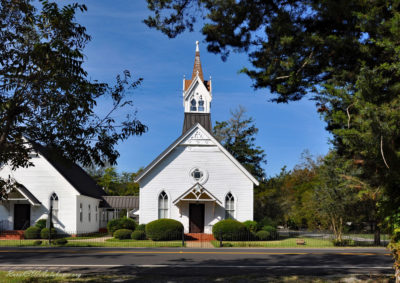
This Gothic Revival styled church was built in 1887 and dedicated in May of that year by Dr. J. L. Otts of Greensboro, Alabama. A fellowship hall was …
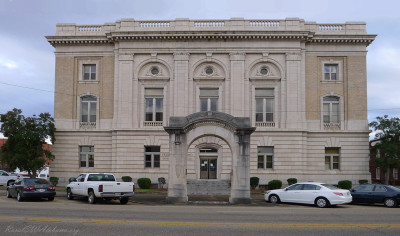
The Federal Building, originally the U.S. Post Office, was completed in 1909 from plans by James Knox Taylor, Supervising Architect of the Treasury 18 …
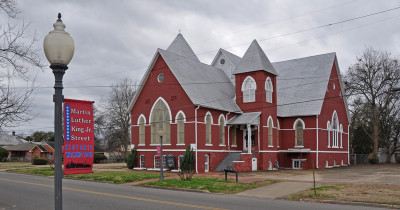
This Gothic Revival-style church building was constructed in 1894 by a local black architect, Dave Benjamin West. This church, along with its nearby n …
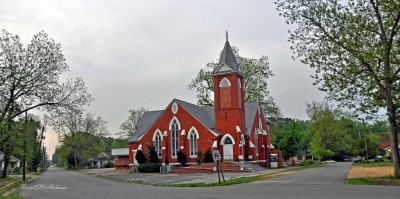
According to the August 5, 1866 minutes of the Uniontown Baptist Church, the Colored portion of the church requested that their White Brothers grant l …
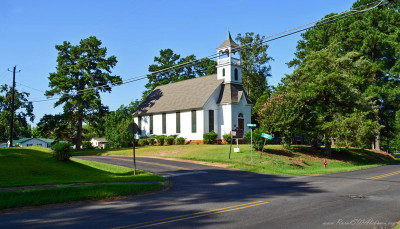
This church congregation was established in 1869 at the Lincoln School by freed slaves and representatives of the American Missionary Association. The …
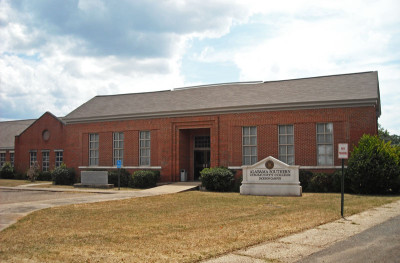
In 1891, nine agricultural schools, one in each congressional district, were authorized by the Alabama Legislature. One of the schools was located at …
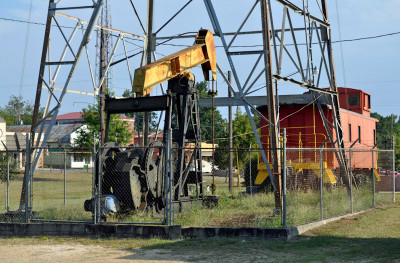
On January 2, 1944, the State of Alabama granted Hunt Oil Company a permit to drill the A. R. Jackson Well No. 1 at Gilbertown, AL. Hunt Oil Company …
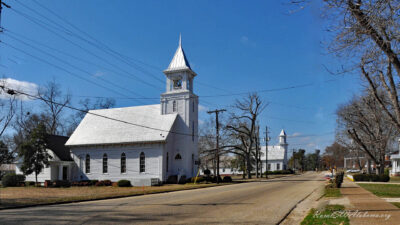
This church congregation was organized in 1845. The original church building was erected in 1856. It burned on September 17, 1869 and the present bu …
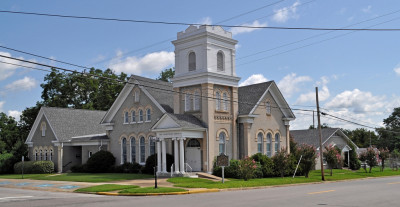
The First Presbyterian Church in Demopolis was organized by the Tuscaloosa Presbytery on November 1, 1839 with nine members. The congregation erected …
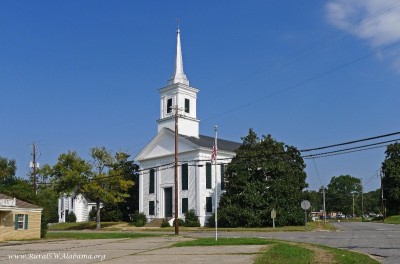
This Presbyterian Church was established as a congregation in 1824, worshipping in a smaller church in old Mesopotamia, one mile to the northwest of E …
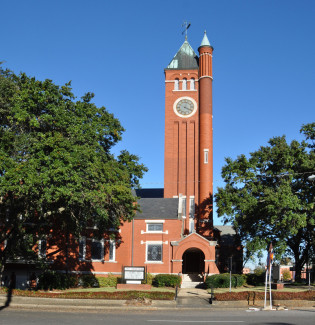
Organized in 1838, the Presbyterian congregation built the present church in 1893-1894. This is their third church building and the second on this sit …
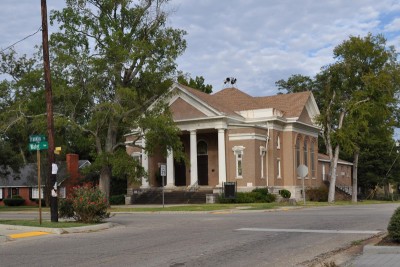
The Presbyterian Church was organized in 1848 at the home of Col. J. H. Davidson, The Slopes Plantation, which was located south of Uniontown. The con …
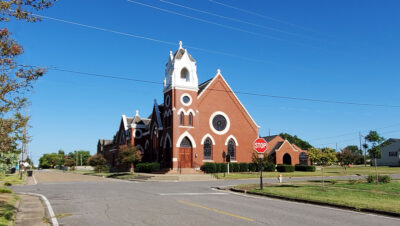
The exact date of the founding of the Demopolis Methodist Church is not known. However, the circuit riders of the Marengo Circuit (1826-1840) were ac …
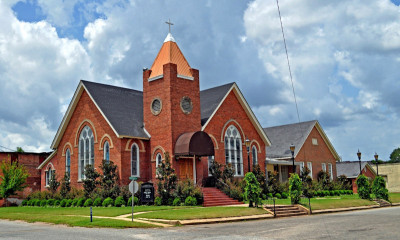
Records indicate that a Conecuh County Circuit first appeared in the Methodist Conference in 1821. The early church was called “Thick Woods” and was …
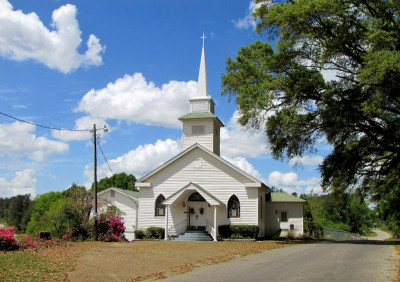
The first mention of an organized Methodist Church in St. Stephens was 1856 and this church was constructed in 1857. Land for the church was given by …
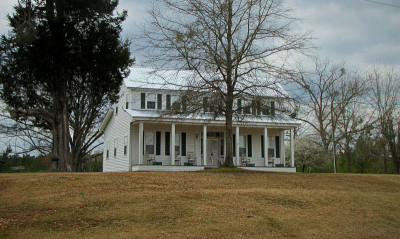
This two story house was built circa 1850 using hand-hewn 12-inch boards put together with pegs. The house was moved back about 30 feet from the highw …
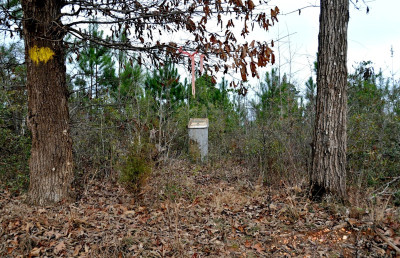
This historical marker identifies the former site of Fort Madison which was a stockade that was used during the Creek War 1813-1814. Fort Madison was …
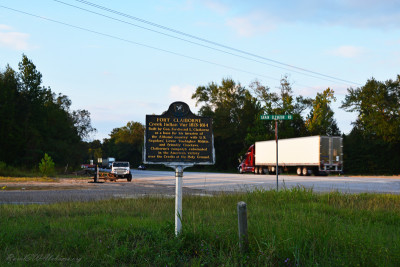
This marker is located about 2 miles west of Perdue Hill in Monroe County on the south side of U.S. Highway 84 near the intersection of Lena Landegger …
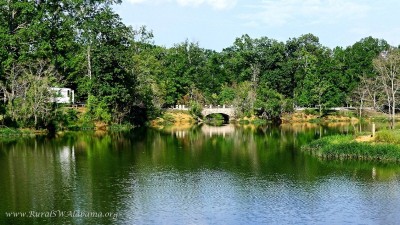
Foscue Creek Park is located at Demopolis, AL on the forested lake shore of Demopolis Lake, the largest lake on the Black Warrior-Tombigbee Waterway. …
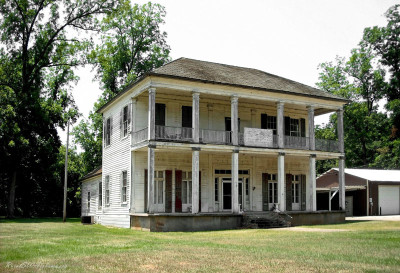
This two-story home was built circa 1851 by Dr. John T. Foster. At the time of its construction, Dr. Foster was a practicing physician in the nearby c …
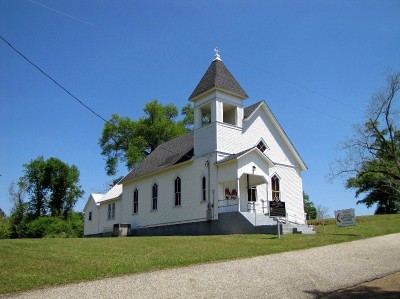
In the fall of 1902, two men and three ladies filed a declaration to form the Fruitdale Union Chapel Association. Property for the church was purchas …
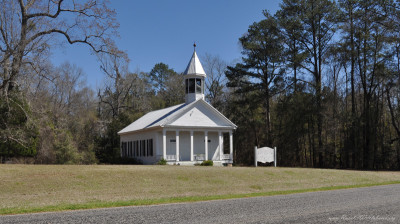
Built in 1882, Furman Methodist Church stands on the site of the original 1857 church, on land generously donated by Mrs. Sarah Patton McCondichie. Th …
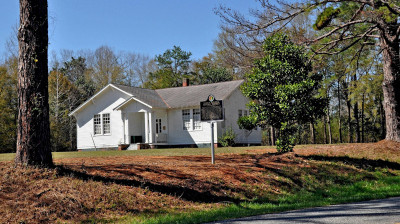
Furman, AL is a small community located is eastern Wilcox County. On May 13, 1999, the “Furman Historic District” was placed on the National Register …
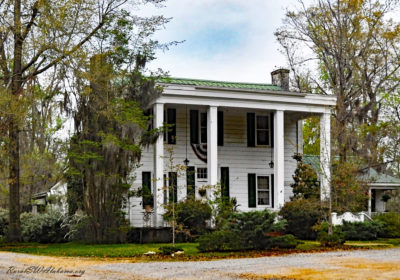
It’s believed that this dwelling was built in the late 1820s. The house’s modified I-frame architecture, the absence of a center hallway, and federal …
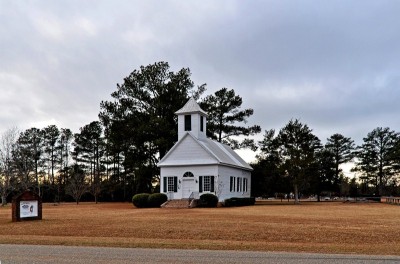
This church was founded in 1819 by Rev. Joshua Wilson. In 1854, a two-story building was built on this site. The lower floor was a church and the upp …
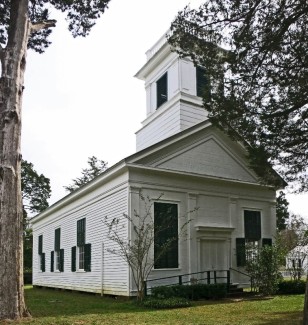
During the 1860 – 1880 period, Edward N. Kring (1836-1910) emerged as the leading carpenter and builder of Gainesville. He built several businesses an …
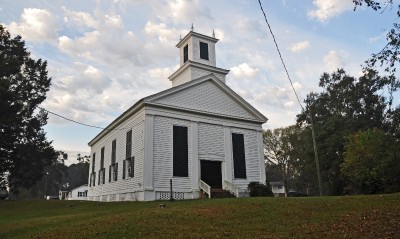
This is Gainesville’s oldest church. The congregation was organized in April of 1837 through the joint efforts of a small group of Southern-born Presb …
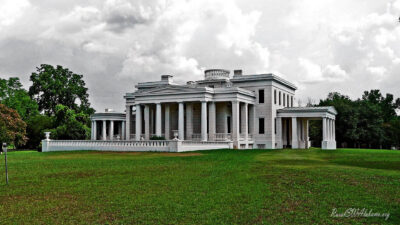
Constructed over an 18 year period (1843-1861), Gaineswood evolved from a two-room “dogtrot” cabin into a Greek Revival style mansion. General Nathan …
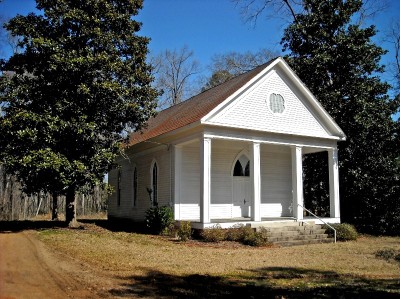
The Presbyterians originally built in the area a hewn-log house for a church. It was replaced with a frame building in 1830. The present Greek Reviva …
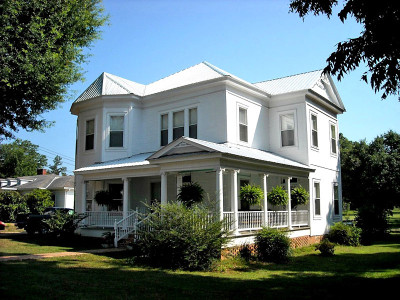
This is one of several “Sears, Roebuck & Co.” homes that were shipped by railroad to Wilcox County in the early 1900’s. They came as modular secti …
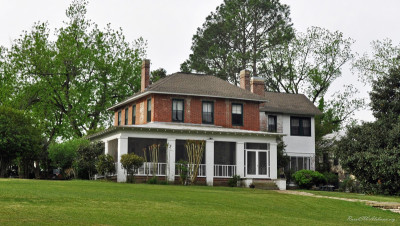
There may be no home in the Black Belt with more history attached to it than this one. It was built in 1828 – 1829 by John Gayle, a South Carolina nat …
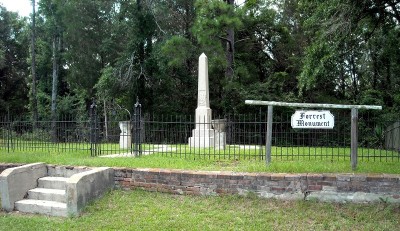
At the site of this monument, Gen. Nathan Bedford Forrest and his troops were paroled by Gen. Canby thus being the last troops east of the Mississippi …
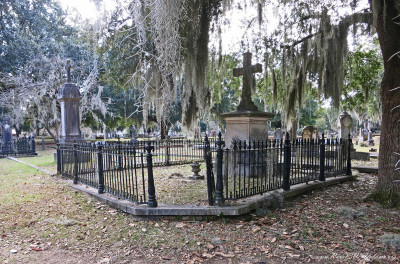
William J. Hardee (1815 – 1873) graduated from the U.S. Military Academy at West Point in 1838. He served in Florida during the Second Seminole War an …
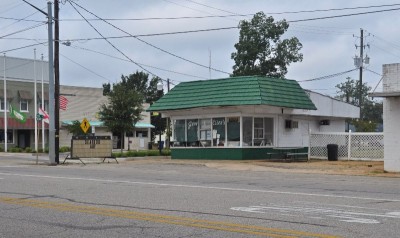
Shown is Gene & Ellen’s Drive-In which is located in the middle of downtown Grove Hill. You walk up to the window, tell the folks what you want an …
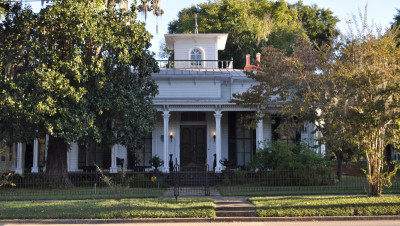
George O. Baker House at Selma, AL (built ca. 1854, site of numerous reports of paranormal activity)
This house was built circa 1854 by Selma businessman George O. Baker. The Neo-Classic architecture features a front porch with pillars and a small cup …
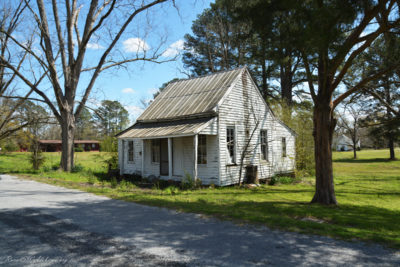
This small cottage was built circa 1880 as a servant’s house. It is located on the south side of Third Avenue approximately 100 yards east of the inte …
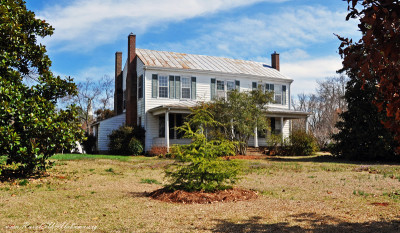
This house was built by Edwin D. King as a wedding present for his daughter Sarah when she married John Goree in May 1831. At that time it had four ro …
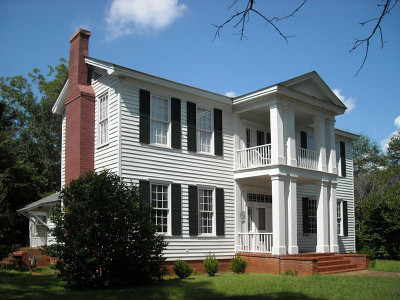
This house, built in the 1830’s, was the home of Alabama’s First Civil War Governor, Andrew Barry Moore. It is located on the north side of Green Str …
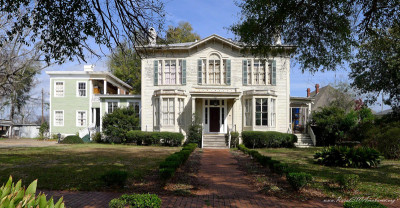
This Italianate-style house was built circa 1857. In 1865, Wilson’s Raiders spared the house out of respect for Selma’s Mayor M. J. Williams. For many …